
Targeting the Right Audience with Amazon CPM Ad Types
Learn how Amazon CPM advertising works and how to target the right audience for more effective campaigns.
Digital advertising is a complex yet effective method of targeting the right audience. And one of the most efficient methods of digital advertising that Amazon shared with us is the Amazon CPM Ad. Amazon shared several Ad types with us, but according to me, the CPM Ad type stands out, and in this blog post, we will share with you the reason behind it.
First, we will learn what a CPM Ad type is, how it is different and efficient from other Ad types, and some tips that you can adopt to target your desired audience with CPM Ads. So, stay tuned to find out the secret behind CPM Ad type.

Table of Contents
- Understanding What Amazon CPM Ad Types Are?
- The Importance of Audience Targeting in Amazon CPM Campaigns
- Types of Audience Targeting in Amazon CPM Ads
- Best Practices for Targeting the Right Audience
- Limitations & How to Overcome Them
- Conclusion
Understanding What Amazon CPM Ad Types Are?
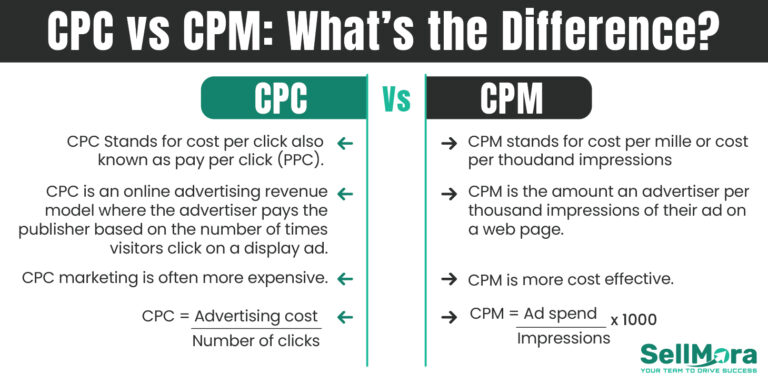
Okay, you understand that Amazon CPM Ads are a very effective method of targeting the right audience, but you might be wondering, what is Amazon CPM? Let me answer this question of yours. So, Amazon CPM, in its full form, is the cost per mile and cost per thousand impressions.
CPM is a pricing model in advertising and marketing . Alao calls it cost per thousand impressions, which means the total ad spend for every one thousand (1000) impressions an ad receives. CPM is a bit different from CPC (cost-per-click). A very brief difference is that CPM is a pricing model in which you pay a specific amount for 1000 impressions, while the CPC model is based on the number of clicks.
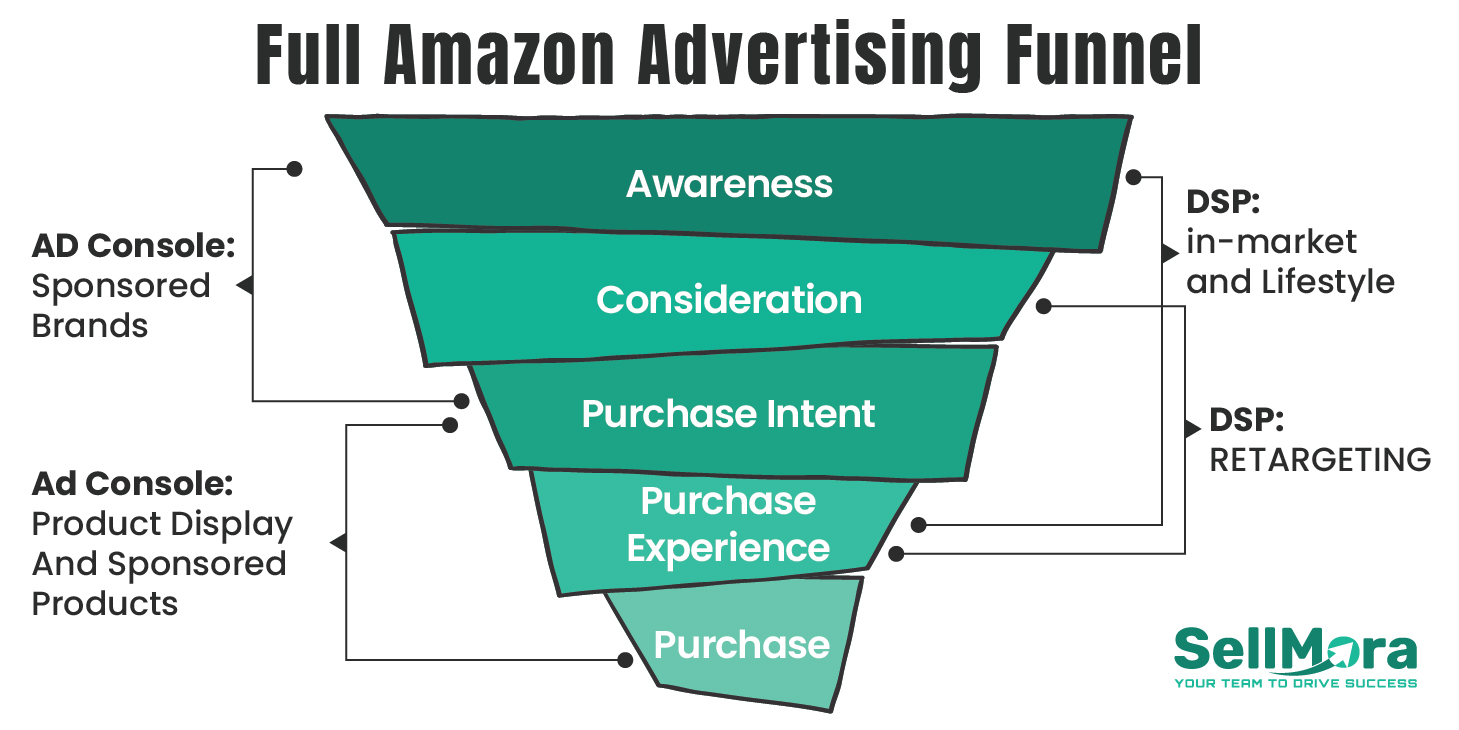
Numerous ad types use the CPM model, including Amazon Display Ads, Sponsored Display Ads, Amazon DSP, and Video Ads. The method of displaying ads is a bit different, but the concept is the same. The advertisers pay for every 100 impressions of their ad being viewed.
The Importance of Audience Targeting in Amazon CPM Campaigns
One would be called a fool if he or she asked the reason behind targeting the audience. Duhh, it’s obvious that you are at Amazon for selling, and selling can be easy if you target the right audience, and for that, you need a strategic approach.
Right audience targeting can enhance your brand’s visibility and create effectiveness in the ad-running process. These ads help build engagement visibility by offering retargeting options and visually appealing product promotions.
Another amazing thing about Amazon CPM is that one needs to pay after 1000 impressions, which is also cost-friendly. Let’s look at an example to understand better. Suppose you are displaying an ad, and you choose the CPM model.
The CPM rate is $5 per 1000 impressions, which means you have to pay $5 every time when your ad hits 1000 impressions. According to these stats, with a budget of $50, you will get 10,000 impressions. It means $50, and your ad can be seen 10,000 times by Amazon users. Isn’t it amazing?

Types of Audience Targeting in Amazon CPM Ads
Advertisements help us attract our dream customers, but unnecessary ads annoy customers as well. But there is no need to worry: With the magic of Amazon CPM Ads, one can target the audience based on their interest, demographics, and behaviours.
Interest-Based Targeting
As the name indicates, you are targeting the audience based on their interests. In interest-based targeting, the seller studies the customer’s browsing history, past shopping experience, and engagement with other categories. Based on these stats, an interest-based chart is created for that specific customer, and ads are shown to them according to their interest.
For instance, if a user’s browser history is based on electronics products, Amazon pits him in the Electronics interested category and deals accordingly. With this method, we can see increased relevance, improvisation in conversational rates, higher engagement, ad visibility, and better ROI.
Behavioral Targeting
The same goes with behavioural targeting; with the past behaviours of the customers, Amazon reads with customers’ behaviour. In the CPM advertising model, Amazon identifies the targeted audience and actively engages with the intent of purchase and sale. This behavioural targeting enhances the conversational rates and tailors the improvised ad efficiencies for better customer insight.
Contextual Targeting
Contextual targeting is based on the context that the customer is watching. In this kind of targeting, the behaviour or interest of the customer isn’t solely based on the previous browsing. However, the interests of the customer are being judged on the basis of the content they are currently engaged with.
Amazon uses a combination of product information, keywords, and page content to place relevant ads. Contextual targeting targets the audience at the moment they are most likely to be responsive.
Retargeting
Suppose you are about to purchase something but, due to some reasons, couldn’t complete your purchase. After some time, the same purchase or things relevant to that purchase came to you. Have you ever wondered why this happens? This is what we call retargeting or remarketing. A strategy of targeting the audience who are about to purchase something so that they will complete their shopping.
The ads act as a stimulus that forces you to fill your abandoned carts. This is also called flexible targeting, which builds trust and improves the brand’s recall.
Best Practices for Targeting the Right Audience
Some of the best practices for targeting of the right audience include a combination of traditional and contemporary methods. Continuous monitoring with regular optimization refines the targeting audience practice.
Another amazing practice to observe and adopt is targeting the competitor’s customer attitude, which will give an insight into the analytics of the better performance of the audience. After understanding the analytics test, experiment with different ad types and analyze what acts best for you.
Limitations & How to Overcome Them
We ensure that the Amazon CPM ad is a powerful method to target the right audience and get the desired results, but with some limitations. The following are some of their solutions’ limitations.
- Over-targeting & under-targeting: Over-targeting and under-targeting are two extreme situations that can lead to low engagement, poor click-through rates, or missed opportunities. The remedy to overcome this issue is to refine the targeting data or layering means the combination of multiple strategies for better ROI.
- Limited audience data access: While studying the stats of Amazon, another relevant issue that was seen is limited audience data access. In this situation, some policies limit the amount of detailed audience data available to the advertisers. This issue can be resolved with the help of retargeting.
- Ad fatigue: Another limitation that advertisers face is ad fatigue. It is the kind of situation that happens when customers are exposed to the same ad numerous times and get annoyed. This issue can be resolved by promoting relevant or creative content and adjusting the frequency cap accordingly.
- Ad attribution & tracking challenges: Ad attribution and tracking challenges are another challenge that we have to face, and the best practice to overcome it is to evaluate the performance holistically by combining data from different touch points.
Conclusion
In digital advertising, the CPM model is an exception for now. It is a very cost-effective advertising method that helps you target your prolonged audience with flexibility. By displaying this dynamic method, several ad-based targeting adheres the brands with greater and optimized campaigns to maximise the efficiency of their budget.
The CPM ad, with its impressionist technique, helps us to achieve several things. We would appreciate it if you shared your experience with us in the comment section below. So we all can learn and grow together.
Our Services
Everything You Need to Win on Amazon.
Let's Clear a Few Things Up
Straight answers to the questions we hear most. Can't find yours? Book a call or message us, and we reply within one business day.
What does SellMora actually do?
We're a full-service Amazon growth team. Brand management, PPC, graphic design, catalog management, and global expansion all work together under one roof, so your listings, ads, and strategy pull in the same direction.
Do you only do design, or PPC too?
Both, and more. Great creatives get the click, and smart PPC gets you in front of the right buyers. We handle the full chain, from catalog and content to ads and expansion.
Who do you work with?
Startups launching their first product and established brands scaling to the next level. Our clients sell in the U.S., UK, Germany, France, and beyond.
How do we get started?
Book a free 30-minute call, or send us your reports for a free audit. We'll review your store and show you where the fastest growth is hiding.
What reports do you need for the free audit?
Search term report summary, search query performance, main keyword report, ASIN report, business report, and order report.
How long does the process take?
The audit and game plan usually come together within days of your call. Once you're onboarded, you'll see your first batch of work or campaign changes shortly after, then we keep optimizing until we hit your targets.
What if I've already tried agencies or freelancers?
You're not alone, and it's usually a coordination problem: one person on design, another on ads, nobody on strategy. At SellMora, everything runs through one team and one dedicated success manager.
Can I hire you for just one service?
Absolutely. Start with PPC, design, or catalog management alone, and add more when you're ready.
Can I start with just one ASIN?
Yes. Many brands begin with one hero product, prove the results, then scale across the catalog.
Can I skip the strategy call and just get pricing?
You can. Pricing depends on your catalog size, goals, and the services you need, so a quick call or audit gets you an accurate quote instead of a generic number.
How much does this cost?
It depends on the scope. We'll give you a clear, transparent proposal after your audit, with no hidden fees and no surprise add-ons.
Do I have to ship my product to you?
No. You keep full control of your inventory and fulfillment. We work on your Amazon account, listings, and ads, not your warehouse.
What results can I expect?
Every deliverable is built to improve rankings, click-through rate, conversion rate, and ROI, not just to look good. Exact results depend on your product and market, which is why we set clear targets in your game plan.
What if I'm not ready to commit yet?
That's fine. The free call and audit come with no pressure and no obligation. You'll leave with real insights either way.
Will I get full performance transparency?
Yes. You'll have a dedicated success manager and regular reporting, so you always know what we did, what moved, and what's next.
Still have questions?
Schedule a callPick a Time That Works for You
Choose a slot for a free 30-minute call with Abdul. We'll look at your account and show you where the growth is.
Abdul Rehman · Sell Mora
30 Minute Meeting
- 30 min
- Video call details sent on booking
- Free account audit included